


Building Blocks for Beginners: Your First Steps with LEGO
Posted by Magic Madhouse on 10th Mar 2025
If you haven’t heard of Lego, you must be new to planet Earth. It’s a toy, a creative outlet, a worldwide phenomenon. It has movies and TV shows and theme parks. James May built a house out of it! It’s not surprising that such a small, well-designed block has gone on to build big things, or that powerhouse brands such as Disney, Nintendo, Minecraft, Star Wars, Harry Potter and more have licensed their most iconic characters and locations to become minifigures and sets.
Last updated May-14-2026
In short: LEGO is the world's most popular construction toy, suitable for builders aged from 18 months up to adult, with sets ranging from 13 pieces to over 11,000. Beginners should pick a first set based on their age, interest (often a licensed theme like Star Wars or Harry Potter), how much time they want to spend, and whether they plan to display or disassemble the build.
What to know before your first set:
- Age ranges: 18+ months, 4+, 6+, 9+, 13+, and 18+. Older ratings mean more complex builds.
- Set size: Smallest is the 13-piece Atlantis Manta Warrior; largest is the LEGO Art World Map at over 11,000 pieces.
- Element variety: Over 3,700 different LEGO elements, from classic bricks to bananas and treasure chests.
- Core techniques: Organise pieces before building, overlap bricks for strength, and follow the SNOT principle (Studs Not On Top) for clean finished surfaces.
LEGO 3-in-1 sets are a strong starting point if you want flexibility to rebuild.
If you haven’t heard of Lego, you must be new to planet Earth. It’s a toy, a creative outlet, a worldwide phenomenon. It has movies and TV shows and theme parks. James May built a house out of it!
It’s not surprising that such a small, well-designed block has gone on to build big things, or that powerhouse brands such as Disney, Nintendo, Minecraft, Star Wars, Harry Potter and more have licensed their most iconic characters and locations to become minifigures and sets.
It’s never been more exciting to be a Lego builder, or more easy for newcomers to get into the hobby. With so many themed sets to choose from, you’re sure to be able to find a set that appeals to you and gets you assembling those iconic bricks for the first time.
Why Choose LEGO: Benefits for Beginners
What exactly is it that makes Lego the ideal building material for all ages? Lego bricks lock together easily and sturdily. If you build a car or a dragon or a castle out of Lego, it won’t fall to pieces when you play with it. And yet, when the time comes to turn the bricks into your next creation, you can disassemble them without difficulty.
It’s the perfect tool for encouraging creativity in children, and can also help them in the development of other areas like:
- Fine motor skills – Thanks to picking up bricks of different sizes, applying varying amounts of pressure to put them together and building different structures.
- Spatial awareness – Developed through building with Lego bricks as children plan and visualise how bricks fit together in a 3D space.
- Problem solving – When children attempt to create their own designs away from instructions, they will need to experiment and make use of Lego’s thousands of different elements to find the piece that works.
Although children may have been the original target audience for Lego, its growing popularity among older fans wasn’t ignored. Lego’s choice to embrace this audience has led to an abundance of iconic and incredible sets. You can now fill your vases with Lego flowers, or build miniature replicas of landmarks like the Great Pyramid of Giza, or have Lego versions of Grogu or Buckbeak decorating your shelves.
A Lego set provides you with clear instructions and every necessary piece to build whatever set you’ve chosen – be it a Japanese-inspired botanical garden or an Italian Vespa. Or, depending on how creative or daring you’re feeling, you can take those same pieces and make whatever you want – aliens, food, a replica of your wedding day, portraits, pets. It can be the perfect way to spend some you-time away from a screen after work or to bond and have fun with your family.
There are over 3,700 different Lego elements – everything from classic bricks to items like bananas, window frames, treasure chests and cats. The fun and challenge of building your own Lego sets comes from finding clever and unique ways to use these elements to create the shapes and effects you need. One notable example is the Lego bonsai tree set, which uses pink frogs as sakura blossoms.
Selecting Your First LEGO Set
With so many Lego sets to choose from, it can be difficult to decide where to start. Fortunately, Lego designs sets for all interests, ages and difficulty levels. By considering your personal preferences and your plan for your finished Lego structure, you should be able to identify the perfect first set to buy.
How Old is the Lego Builder?
The answer to this is particularly important if you’re planning to buy Lego for children under the age of 4, as some Lego pieces will definitely be a choking hazard.
Luckily, Lego has smaller, simpler sets with larger pieces available for children aged 18+ months. The rest of Lego’s sets use standard size bricks and elements, and are divided by suitability for builders aged 4+, 6+, 9+, 13+ and 18+ years. Typically, the older age rating means a more complex build and a theme more appealing to older fans.
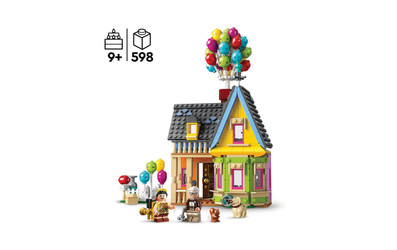
If you’re looking to buy Lego for yourself, then the 13+ or 18+ categories may be the most suitable ranges to look in. However, that’s not to say you’ll never be interested in the sets for younger ages. If you’re a Disney fan, the Simba for 6+ and the house from Pixar’s Up for 9+ are great options.
What Are You Interested In?
A lot of first-time Lego builders tend to get drawn in by the news that a TV show, film or video game they’re a fan of is getting a set. Lego has made sets for The Simpsons, Stranger Things, Friends, Indiana Jones, The Big Bang Theory, Jaws and plenty of other pop culture icons.
So if you love Harry Potter or Animal Crossing or Sonic the Hedgehog, there’s a clear choice for your first set. Follow your interests, and perhaps once you’ve built that set and found you have a taste for assembling Lego bricks, you can come back and branch out.
How Long Do You Want to Spend Building It?
The smallest buildable Lego set is the Atlantis Manta Warrior from 2010, with only 13 pieces. The largest set is currently the Lego Art World Map from 2021, which has over 11,000 pieces. All other sets have a number of pieces somewhere within that range, meaning some sets can be done in a couple of hours during a rainy afternoon, while others will claim your tabletop for weeks.
The larger the set, the more complex it tends to be, so as well as deciding how challenging you want to find your first Lego structure, you should also consider how long you want to spend building it.
Fortunately, Lego doesn’t throw all the pieces into the box loose like a puzzle. The instructions will be divided up into sections, with the pieces for each section sealed in clearly marked bags. This allows you to start and stop a more complex Lego build to fit in with your schedule. But take it from an addict – once you start building that Lego masterpiece, you won’t want to stop until it’s finished!
What Do You Want to Do With Your Lego Set After It’s Built?
Finally, you should definitely think ahead to when you’ve finished building your set. Is the plan to display the finished structure, or do you want to break it up and have a go at building something else from the bricks?
If you’re planning to display your Lego structure, make sure you know where it’ll go. Some of the larger sets take up more space than you may think, and you won’t want to move them around much for fear of the odd piece falling off.
If you want to tear your Lego creation apart and turn it into something new, then think of the sets as buying in bulk, with the added bonus of getting exclusive pieces and minifigures. You may also want to consider buying the Lego 3in1 sets, which give you the instructions for three different structures that can be created from the same bricks. These sets are usually quite simple too, so may be a good starting point for honing your own designs if you’re hesitant to break up your completed sets.
Basic LEGO Building Techniques
Your Lego set will always come with everything you need: instructions with images, a special tool to help separate bricks, spares of the smallest set elements. It may not look how you’re expecting when you first start putting everything together, but that’s the fun of the build – seeing what techniques have been developed by professionals to achieve certain shapes and effects.
As you build your set, you’ll start to realise the best ways to use Lego bricks to create structures, which in turn will help you when you decide to build your own designs.
Here are a few basic tips and techniques to remember when you’re building with Lego:
- Organise your bricks – Planning and organisation are king when starting your Lego build. Although the bags are helpfully sorted by section, they’re still filled with lots of different bricks and elements. Before you start assembling them, it can be helpful to sort the pieces into piles based on colour, type, size, etc. This will stop you from getting the pieces mixed up if there are similar ones with different uses.
- Overlap your bricks – You’ll notice, when building walls or bodies or other parts of your structure that need to be sturdy, that you don’t just put several of the same brick on top of each other. You overlap them, each new brick covering the gaps between the bricks below it, and change their orientation. This helps make the structure stronger.
- The SNOT Technique – SNOT stands for ‘Studs Not On Top’. You’ll notice, as you build, that it’s the smooth edges of the Lego bricks that are visible on the outside of your structure, not the studded tops. Always try to keep the studs hidden where you can so that the finished structure will be even and visually appealing.
Tips for Organising and Storing LEGO
One of the plus sides of leaving a finished set intact is that you don’t have to worry about storing and organising the Lego bricks. If you’d rather separate the pieces from a set and put them to use for your own ideas, you don’t want a tub of Lego that’s impossible to sort through. You want to know exactly what pieces you have at your disposal, how many you have, and where they are.
If you’ve ever watched the TV show Lego Masters, you’ll notice that every contestants’ eyes light up when they walk into the storage room and see all the different drawers filled with bricks and elements of every type, size and colour. Unfortunately, not many of us will be able to dedicate an entire room to Lego organisation, but there are plenty of plastic desk drawers and jewellery trays that will work well for organising Lego bricks.
The important thing is to:
- Keep the different types of pieces separate from each other – you don’t want to be rummaging for hours looking for that single brick you need.
- Ensure everything is clearly labelled – so you’re not opening multiple drawers before finding the right piece.
- Know how your organisation system works – it may look like chaos to someone else, but so long as you know how to find the exact brick you’re after, it works.
- Protect your Lego from dust – dusting Lego is a nightmare and you want your bricks to be clean and satisfying to use.
Finding LEGO Sets at Magic Madhouse
By now, you’ve hopefully made up your mind and decided to give Lego a try. Now you just need to find somewhere online to browse and buy potential sets, and Magic Madhouse is the place.
Not only can you search through the available sets using license, category and price as a guide – you can also jump straight to new releases, sets under £20 and even sets in the sale. Plus you get free shipping when you spend £30 or more, and can combine your order with a range of other similar-interest goods like Funko pops and board games.
Welcome to your new obsession!