


Understanding MTG’s Avatar Mechanics: All Bending Mechanics Explained
Posted by Magic Madhouse on 8th Dec 2025
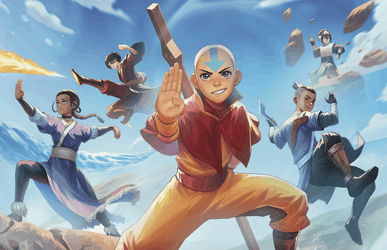
Magic: The Gathering’s latest ‘Universes Beyond’ release is Avatar: The Last Airbender, and the world of Aang and friends is a perfect fit for Magic. The ‘elemental’ aspect of the story fits really neatly within Magic’s colour pie, while the cast of interesting characters provides plenty of new legendary creature options for Commander too.
Magic: The Gathering’s latest ‘Universes Beyond’ release is Avatar: The Last Airbender, and the world of Aang and friends is a perfect fit for Magic. The ‘elemental’ aspect of the story fits really neatly within Magic’s colour pie, while the cast of interesting characters provides plenty of new legendary creature options for Commander too.
It also means that we've some exciting new keywords to look at representing the five ‘bending arts’, so let’s take a deep dive into each of the key elements that comprise the MTG avatar mechanics.
Airbending – mobility and evasion
Airbending is my kind of mechanic! Ever since the release of Visions way back in 1997, players have seen the huge benefits of creatures with ‘enter the battlefield’ abilities like Nekrataal and friends. And as cards get increasingly more powerful, creatures that have an impact as soon as they enter are even more valuable.
Airbending is in white and allows you to temporarily exile a creature, which can be cast again later by its owner for two generic mana. Let’s breakdown the flexibility this offers:
- Reusinging ‘enters’ effects – airbending a creature with an ‘enters’ effect allows you to get another use out of it. Nice!
- Saving your creatures from removal – on some cards, airbending can be done at instant speed for quick removal dodging, but even at sorcery speed you can still protect your creatures from your own/opponent’s mass removal spells, like Farewell, by Airbending them before wrathing, and then bringing each back for just two mana!
- Removing your opponents creatures – airbending doesn’t specify it has to be your creatures, meaning you can clear the way for a big attack or simply try and out-tempo your opponent by Airbending their board. This can be especially potent when combined with effects like Drannith Magistrate or Aven Interrupter that ‘tax’, or simply just don’t allow, spells cast from anywhere but their hands, meaning they aren’t coming back!
- Mass spell pay-offs – permanents that want you to play spells such as Cosmogrand Zenith work well, as do the likes of Guardian Project.
Airbending is bound to see a lot of play due to its versatility, and will find a natural home in the already popular ‘blink’ archetype.
Firebending – Aggression and brun
Firebending is all about one thing: attacking!
Specifically, it enables you to add red mana when you attack, but this mana must be used by the end of combat, meaning you’re really looking for instant speed spells and abilities to take advantage of the mana burst.
Naturally, instant-speed burn and pump spells are good here: you declare attackers, get the mana, then use that mana to destroy any blockers before the declare blockers step. You can employ some trickiness here too, e.g. wait until declare blockers, and then use the burn spell to finish off the creature, or pump up your creature. For this reason, creatures with first strike give you a nice combo too, finishing off blockers before they are able to deal damage.
Then cards like Brutal Hordechief and War Cadence are great combos, providing activated abilities to use the mana on, which also directly impact combat, giving you control over how your opponents block (or don’t block!).
Waterbending – Flow and control
Waterbend is a variant of convoke or improvise, enabling you to play spells or activate abilities for cheaper by tapping artifacts and creatures.
To make waterbending work, it’s clear that you need to be playing to the board, whether that’s directly with creatures and artifacts, or more of a token strategy (e.g. treasure or clue tokens).
As well as powering out spells or activated abilities for cheaper, waterbending also has the nice benefit of being a ‘tap’ enabler, allowing you to tap your own permanents for benefits. For example, tapping a Kona, Rescue Beastie can lead to some seriously broken plays, especially when combined with the waterbending Yue, the Moon Spirit, who also helps drop big scary permanents into play ahead of schedule.
It's also a lesser known rule, but tapping certain artifacts used to turn them ‘off’, meaning that they don’t impact you or your opponent. Modern printings of these cards spells it out in the rules text, but tapping a Howling Mine on your turn, for example, means it’s ‘off’ for your opponent and they won’t draw a second card, meanwhile tapping your Winter Orb at the end of your opponent's turn will mean it’s ‘off’ for you and you can untap all your lands!
Earthbending – Defence and resilience
Earthbending provides a new twist on a classic, and turns your lands into creatures with a certain amount of +1/+1 counters on them. What’s new, however, is that if the land dies or is exiled, it comes back tapped.
This is HUGE. While cards like Nissa, Who Shakes The World, have seen play because of the raw power, it’s always been a huge downside that creature lands can die relatively easily, and therefore set you back on mana. Earthbending brings the land back, providing some really interesting opportunities besides just inbuilt creature insurance:
- Landfall decks will get additional triggers
- You can effectively protect key lands, e.g. Field of the Dead, by turning it into a creature that will come back. Yes, in its creature state it’s more vulnerable, but it also means it’ll return if taken out by a Stone Rain effect
- ‘Aristocrat Lands’ anyone?! Earthbending allows you to sacrifice your creature-lands knowing the land will come back. The Gitrog Monster is going to love it
- +1/+1 counter synergies – as the abilities put counters on your creatures, anything that interacts well with those will play well, from Doubling Season effects to The Ozilith
The Avatar State – Mastering all four elements
Some cards in the set reward not just one of the bending arts, but using all four! Avatar Aang not only rewards doing any one of them by drawing a card, but if you manage all four in a turn, you transform him into Aang, Master of the Elements, which is pretty much game over for your opponents.
How to build a bending deck
Whatever kind of elemental bender you are, you’ll be able to build a Commander deck that suits your needs. There are multiple three, two and mono colour legends with bending abilities to get you started, including Fire Lord Zuko in Mardu for Firebenders, and Toph, the First Metal Bender in Naya for Earthbending. Whether it’s one of the new mechanics that speaks to you, or just your favourite character, you’ll have plenty of options.
Shop Avatar MTG cards at Magic Madhouse
Can’t wait to get bending? Then you’re in luck! Everything you need for Avatar: The Last Airbender is right here at Magic Madhouse! Whether it is sealed product, or you want to start building your own Commander deck, with great prices and fast shipping we have every element covered. Happy bending!